Miramar
A busy eastern hub, home of the WETA movie industry

Overview
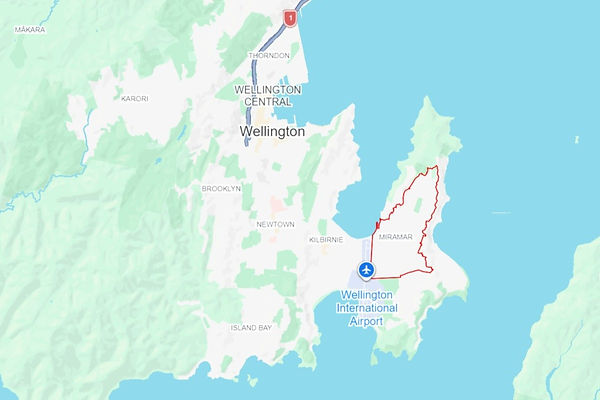
Mostly flat, sunny and well serviced by a large community shopping hub, Miramar is a desirable locality for those wanting a self contained suburb with a wide range of housing styles and price brackets. Miramar has been subjected to excessive subdivision over the years, and it’s hard to find attractive, full size sites anymore. This gives the suburb an intensified feeling which probably won’t appeal to those that prefer privacy from their neighbours. However, the range of services here and the level land makes it appealing for those with young families, and to those in their retirement years.
Best Suited To
Young families, retirees, airport workers, film industry staff.
Population Profile
Miramar is a well established family area, its roots going back to the late 1800’s when the valley was first settled. The area is diverse in its makeup, predominately of European descent (65%) but with above average numbers of Maori, Pacific Islanders, Asian, Middle Eastern/Latin American and African people.
The area is dominated by family groups, statistics showing above average numbers of pre-school children and parents in the 35 to 50 year age group. There are also a large number of retired and elderly folk here.
Less represented are the tertiary education and young workforce groups (18 to 34). Higher educational qualifications tend to be less prevalent in Miramar, although we note that there has been a jump in those with bachelor degrees since the 2006 census, possibly as a result of growth in the film industry here. This is mirrored by growth of those involved in the creative arts.
Typical Homes
Miramar has a wide variety of housing styles, but bungalows from the 1920s and 1930s tend to dominate. Most of the valley floor was developed by 1940. New Zealand’s first State house was built in Miramar in 1937, and still stands today.
The 1960’s and 1970’s saw the demolition of some character housing, whereafter larger family homes became the norm, better orientated to capture sunlight and enjoy outdoor living.
The 1960s and 1970s saw the development of multi-unit flats, interspersed between renovated bungalows on the valley floor. There is some modern housing in Miramar, although this tends to be on a small scale.
Amenities
Miramar has a central shopping village, where you will find most of your daily needs. This includes a supermarket, chemist, library, vet, fruit and vegetable market, bakery, hair salon, a well regarded Mexican restaurant, and various takeaway stores. The area is also home to popular, Palmers Garden Centre.
There are a number of schools in the Miramar area. These include Holy Cross School (Years 1 – 8), Miramar Central School (Years 1 – 6), Miramar Christian School (Years 1 – 8), Miramar North School (Years 1 – 6), Miramar South School (Years 1 – 8), and Scots College Preparatory School. The nearest secondary schools are Scots College (private, boys), Rongotai College (state, boys), St Catherine’s College (state, Catholic girls) and St Patrick’s College Kilbirnie (state, Catholic boys).
The Roxy movie theatre has been restored in recent years and is a popular leisure destination for locals and for those visiting the suburb. The WETA Cave on Camperdown Road is a movie lover’s paradise, showcasing props, costumes and collectibles used in The Lord of the Rings and Hobbit movies. Miramar has a number of parks, mostly located on the level area of the valley floor, and some utilised by local sports teams.
Real Estate Trends
Family homes in Miramar continue to attract good buyer demand, across all price levels. Entry homes, three bedrooms with some character features intact but needing renovation, will normally sell in the $850,000 to $1 million price range. Those fully renovated and are a little larger, on level sites, are likely to cost $1.2 million plus.
Large homes on spacious sites can attract prices up to $1.5 million. Once prices hit the $1.5 million mark the suburb tends to get bypassed for preferred neighbouring suburbs like Seatoun and Seatoun Heights.
Flats, units and smaller homes on crosslease sites attract a number of buyers here. These will usually fall within the $450,000 to $750,000 range.
Best Streets
Chelsea Street and Ashleigh Crescent are handily located, a short walk to the shopping area and school. Strathavon Road and Ellesmere Avenue have a number of attractive character dwellings on larger sites.
House Prices
Details of property prices are contained with our 295 page book, Where to Live in Wellington. Available via digital download, or print. Includes over 150 photos!
Travel Times
Central city – driving,10 minutes non-peak, up to 30 minutes peak.
Airport – driving, five minutes non-peak.
Hutt Valley – driving, 25 minutes non-peak.
Weather
How you fare with the weather depends on where you are placed in the suburb. The northern end of the valley is sheltered, protected by the Maupuia hill. The southern part of the suburb is more exposed, as are the streets on the elevated, north and west facing foothills.
Where to Live in Wellington
An independent, locally-written guide to the 51 suburbs of Wellington City, New Zealand. Companion site to the book of the same name.
©2026. Where to Live in Wellington. All Rights Reserved.
Contact
Wellington, Aoteoroa NZ
Made with care in Te Whanganui-a-Tara